SAP EAM
Enterprise Asset Management
is the combination of software, systems, and processes to maintain and control a company’s operational assets and equipment. It helps to reduce cost for emergency repairs, increase asset lifecycles and maximize uptime through preventative maintenance. With enterprise asset management, organizations can be proactively prepared for audits and inspections, save money on fines, and avoid negative publicity.
Enterprise Asset Management
is the combination of software, systems, and processes to maintain and control a company’s operational assets and equipment. It helps to reduce cost for emergency repairs, increase asset lifecycles and maximize uptime through preventative maintenance. With enterprise asset management, organizations can be proactively prepared for audits and inspections, save money on fines, and avoid negative publicity.
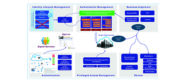
SAP EAM is a software solution to help maximize an organization’s asset health and performance. It supports the maintenance and service of physical assets with real-time insights, loT, machine learning, mobility, and advanced predictive analytics. The solution allows companies to plan, schedule and maintenance operations better by the integration of intelligent technologies to deliver new value and optimize processes. Real-time insights help maintenance teams make better decisions, enhance efficiency, perform preventative maintenance, and maximize investments in physical assets.
Key Capabilities of SAP Enterprise Asset Management are:
- Asset Performance. Risk estimation and evaluation, reliability methodologies, and AI predictive maintenance.
- Field Service. Workforce scheduling and dispatching, analytics reports and dashboards, mobile field service.
- Mobile EAM. Work order management, compatibility with multiple devices, and mobile asset management.
- Asset Tracking. Collaborative EAM, centralized asset data hub, and automated equipment tracking.
- Maintenance Operations. Asset operations and planning, maintenance scheduling, and maintenance execution.
- Geographic enablement. Standalone geometry explorer and editor, geospatial enabled solutions, and GIS data.
- Crowd service. Collaborative service ecosystem, skill and qualification management, and AI-enabled technician empowerment.
Benefits of Enterprise Asset Management are:
- Reduce overall maintenance costs by preventative maintenance
- Schedule and plan maintenance proactively
- Understand the overall equipment effectiveness (OEE)
- Automate equipment alerts and communication
- Ensure regulatory compliance
Key considerations for SAPinsiders are:
- Take Asset Management Planning to the Next Level. In this article discover how to bring an advanced and strategic approach to asset management. Including balancing cost, risk, and performance in your company’s objectives.
- Discover SAP’s Approach to Intelligent Asset Management: The Convergence of EAM and APM. This event presentation talks about how the processes and systems have grown with managing enterprise asset management. Capabilities now include managing the entire life cycle covering both enterprise asset management (EAM) and asset performance management (APM).
958 results
-

Navigate the Complexities of Big Data with SAP Vora
In today’s world of distributed and near endless big data, IT faces a wealth of new challenges. Data scientists must find ways to work with multiple data sets pulled from a myriad of sources to derive conclusions and reach actionable business decisions. SAP Vora, an in-memory query engine that plugs into the Apache Spark execution…
-

Global Law Firm Motions to Eliminate Risk
Managing risk and keeping controls in place are important concepts for companies of all shapes and sizes — not just public companies needing to comply with Sarbanes-Oxley. Linklaters, a private, global law firm, felt these challenges first-hand after spending too long cobbling together external spreadsheets and manual processes to track access among users distributed around…
-

Full Schedule of SAPPHIRE NOW 2016 Video Steam
Join us on SAPinsider Online for a virtual look at SAPPHIRE NOW 2016, with a sampling of key sessions and keynotes streaming live from Orlando. Starting Tuesday May 17, SAPPHIRE NOW 2016 coverage of the keynotes from SAP CEO Bill McDermott, Hasso Plattner, Rob Enslin, President, SAP Global Customer Operations, and SAP Executive Board…
-
In a “Customer-First” World, Don’t Let Sales Get Lost in the Shuffle
The market has undergone a major shift when it comes to CRM platforms. Organizations are focusing on the customer experience. Platforms like SAP C/4HANA claim to modernize the “sales-only” focus of previous generations of CRM, and instead take a more holistic system approach with a focus squarely on the customer. But as you consider your…
-
Know Every Aspect of the ABAP Test Cockpit: Part 1
Learn the steps for configuring the SAP NetWeaver ABAP Test Cockpit to ensure that your SAP system’s ABAP programs remain clean and adhere to the best programming practices.
-
Drinking Water Company Vitens Connects HR and GRC Business Roles to Achieve an 80% Automated Provisioning Rate
For global organizations that serve millions of customers who depend on on-time delivery of products and services, having efficient processes to onboard new employees is critical. One such SAP customer is Vitens — a drinking water company with 1,400 internal employees that serves 5.6 million customers across five provinces in The Netherlands and maintains 49,000…
-

Michael Pytel on Solution Manager 7.1, testing, BPCA & TBOMs (Q&A transcript)
I recently moderated a web forum with NIMBL‘s Michael Pytel on SAP Solution Manager 7.1 support for test management and change impact analysis. Michael took questions on the accuracy of BPCA, using static vs. dynamic TBOMs, new features for BPCA and TBOMs, and other topics. For the full Q&A, you can view the questions and…
-
Tips on GRC 10.0 implementation & maintenance: Technical advice from Deloitte’s Kurt Hollis (Q&A transcript)
How can you prepare now for optimal SAP GRC 10.0 performance, and what steps can you take to prevent problems post-rollout for your GRC 10.0 landscape? GRC 2013 speaker and Deloitte expert Kurt Hollis took questions on March 7 in our Compliance Forum discussion thread, moderated by Matt Moore, conference producer, GRC 2013. You can…
-

Manage Material Requirements Planning Exception Messages in SAP
Exceptions generated via material requirement planning (MRP) on the MRP elements should be evaluated daily or, at a minimum, weekly. Managing MRP exception messages effectively at the operational level is an essential business activity because these messages impact operational key performance indicators (KPI). Depending on the organization size and product volumes there could be hundreds…
-

Aggregate Inventory Management in SAP, Part I of II
Organizations strive to achieve high standards in customer service with balanced investment inventory. Material planners, from the plant to managerial to the corporate level, work on managing inventory on a periodic basis to maintain balance between inventory to carry vs. customer satisfaction. The right tools can replace spreadsheets to help organize this information effectively on…
Related Vendors


Your request has been successfully sent