SAP Procurement
Supply Chain Management: SAP Procurement
Strategic and innovative procurement is at the forefront of the supply chain today. While the root of procurement is all about connections and relationships, digitalization has now streamlined the experience and visibility. There are new opportunities to master the ability to maintain the right balance between the intersections of quantity, price, and time.
Procurement Simply Defined
Procurement is a process of acquiring goods or services in the right quantity, at the right price, and at the right time. Understanding supply chains is an important step because it helps to find reliable suppliers that best fit the business requirements. Minimizing cost is a crucial aspect but it should be combined with capacity planning, quality, and delivery reliability. Some organizations are using SAP Procurement, which is one aspect of supply chain management. It involves all activities in daily business operations for obtaining goods and services. There are generally three stages in the procurement process: sourcing, purchasing, and payment.
9 Steps in the Procurement Process are:
- Identify the goods and services needed
- Submit a purchase request
- Review and select vendors
- Negotiate terms and pricing
- Create a purchase order
- Receive and inspect the quality of goods
- Conduct three-way matching in accounts payable
- Approve the invoice and make payment
- Record keeping.
Key components work together to make the procurement process happen. They include people, process, and paperwork. Building and maintaining relationships should be a top focus for procurement professionals to gain a competitive edge. By monitoring procurement KPI’s, businesses can empower teams to analyze savings and track supplier performance in a more simplified way.
Benefits of Procurement are:
- Higher productivity
- Lower management expenses
- Trusted supplier relationships.
Using intelligent technology to harmonize processes and approvals will lead to cutting costs, driving compliance, and gaining visibility for an organization. Vendor partners that can offer solutions and services for software or strengthen process efficiencies include – SAP, Reveal or Gib.
Further insights for SAPinsiders are:
- The Future of Enterprise Procurement: Saravanan Narasimhan outlines the benefits of a digital landscape for procurement. Stressing that a successful means of digital procurement in the corporate world is through early involvement. Redefine procurement from a tactical expense to a strategic investment.
- Streamline Procurement Processes with the Raw Material Procurement Cockpit. Kaushik Choudhury explains the raw material procurement cockpit features, which can be used by small or large businesses. It supports planners working with multiple suppliers for the same material or several materials.
- Sneak Peak: Sustainable Procurement as an Embedded Process in Supplier Management Activities. William Newman shares how to stay ahead of the curve on sustainability by previewing these conceptual roadmaps and the expected releases of related SAP functionality.
21 results
-

THE CHANGING SHAPE OF PROCUREMENT
The-changing-shape-of-procurement explores how procurement is transforming into a strategic business partner powered by digital technologies, automation, and data-led decision making. The white paper outlines the “Next Generation Procurement” model, showing how organizations can unlock greater value, innovation, and growth by repositioning procurement beyond traditional sourcing and cost management.
-

A SILK PURSE FROM A SOW’S EAR
a-silk-purse-from-a-sows-ear demonstrates how organizations can unlock substantial profitability by strategically managing indirect spend rather than focusing solely on revenue growth. Drawing on extensive analysis across industries, the report shows how modern procurement capabilities and data-driven decision-making can convert overlooked cost-saving opportunities into measurable business value.
-
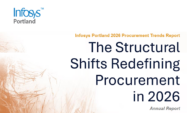
The Structural Shifts Redefining Procurement in 2026
The infosys-portland-2026-procurement-trends identifies ten major trends reshaping procurement, from AI-enabled workflows and digital trust to supply chain resilience and strategic supplier partnerships. It provides a forward-looking roadmap for procurement leaders seeking to strengthen continuity, governance, and value creation amid increasing volatility and technological change.
-
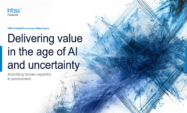
Delivering value in the age of AI and uncertainty
Procurement leaders in industrial manufacturing are navigating a rapidly changing environment where cost management alone is no longer enough, requiring greater focus on resilience, sustainability, and supply chain visibility. This benchmark reveals how top-performing organizations are leveraging AI, stronger decision-making frameworks, and more adaptable operating models to deliver value in an era of uncertainty.
-
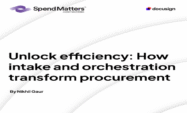
Unlock efficiency: How intake and orchestration transform procurement
The guide from Spend Matters and DocuSign outlines how to enhance SAP procurement processes by using intelligent intake and orchestration tools to streamline requests, automate workflows, and foster collaboration across departments, ultimately reducing risks and cycle times while allowing teams to focus on strategic activities.
-

The Digital Procurement Guide
The Digital Procurement Guide from DocuSign demonstrates how organizations can enhance their SAP procurement processes by integrating e-signature and digital workflows to shorten cycle times, reduce errors, and ensure compliance, ultimately modernizing approvals and maximizing ROI.
-

Creating peace of mind for supply chain leaders
Explore the key ways in which SAP cloud-based technology can protect your supply chain from market uncertainty and unlock your procurement function’s full potential. Discover procurement process transformation insights from 430 c-suite executives. Download the PDF here
-

Five Questions Every CPO Should be Asking
SAP reveals the five key data-driven questions procurement leaders should be asking themselves and their teams in order to critically evaluate their procurement functions. Download the PDF here
-

Unlocking warranty recoveries
Explore how effective warranty management can reduce maintenance costs and enhance operational efficiency in asset-intensive sectors.
-

 Premium
Driving Procurement Transformation with Source To Pay Program
Click HERE to view the presentation deck slides. Overcoming a complex procurement process plagued by 66 steps, off-system endorsements, and manual handling of 5.3 million documents annually, Queensland Transport and Main Roads (TMR) realized the need for a transformation. Suppliers faced challenges with administrative burdens and late payments due to manual invoicing and payment processes....…




Your request has been successfully sent