SAP SRM
SAP Spend Management: SRM
When an organization has many suppliers, it is critical to manage them efficiently and build long-term relationships. Establishing long-term relationships allows for more ideas and feedback to flow freely, streamlined operations, cost reductions, and improved customer service.
SRM Defined
SRM stands for Supplier Relationship Management, which falls under supply chain management. The main purpose is to establish two-way relationships between organizations and suppliers via a web-based platform. It covers innovative methods to coordinate business processes with suppliers, so they are more productive. SRM is integrated with the vendor’s systems for greater efficiencies with interactions. With SAP Supplier Relationship Management (SAP SRM), organizations can examine purchasing history, shorten procurement cycles, and collaborate with partners all in real time.
SAP Spend Management: SRM
When an organization has many suppliers, it is critical to manage them efficiently and build long-term relationships. Establishing long-term relationships allows for more ideas and feedback to flow freely, streamlined operations, cost reductions, and improved customer service.
SRM Defined
SRM stands for Supplier Relationship Management, which falls under supply chain management. The main purpose is to establish two-way relationships between organizations and suppliers via a web-based platform. It covers innovative methods to coordinate business processes with suppliers, so they are more productive. SRM is integrated with the vendor’s systems for greater efficiencies with interactions. With SAP Supplier Relationship Management (SAP SRM), organizations can examine purchasing history, shorten procurement cycles, and collaborate with partners all in real time.
Key Capabilities are:
- Operational Procurement: Catalog management, invoice creation, processing purchase orders, and shopping cart management.
- Strategy Sourcing: RFx and bids management and centralized sourcing.
- Operational Contract Management: Centrally managing supplier contracts.
- Supplier Self-Service: Self-service capabilities for suppliers.
- Services Procurement: Managing services for procurement.
- Operational Reporting: With workforce mobility option.
The significance of SRM is that it automates and streamlines the processes for materials that are ordered frequently, optimizing procurement. It allows organizations to maintain long-term relationships with the right suppliers who have proven historically to be reliable partners. SRM supports supplier information management, compliance, risk management, and performance management.
Benefits of SRM
- Coordinates business operations
- Automates workflows
- Standardizes goods and services acquisitions
It is important to note the difference between SRM and procurement. SRM focuses on contracts and relationships, while procurement focuses on purchases, like ordering, invoicing, or paying. SAP has a cloud-based B2B sourcing and procurement application called Ariba where buyers and suppliers can do business in a networked structure. It provides capabilities such as supplier management, strategic sourcing, supply chain, procurement, services procurement and external workforce, and selling and fulfillment.
Vendor partners offering SRM include apexanalytix, SAP, smartShift.
Key Considerations for SAPinsiders are:
- Increase Supplier Compliance with Sustainable Business Networks. Discover why accurate records of supplier compliance in procurement and ongoing supplier management activities is an important activity.
- Simplify Supplier Qualification with SAP Supplier Lifecyle Management. Learn the functionality of how to simplify and foster supplier relationships, by reading this article.
- Understanding the Key Aspect of Supply Chain Visibility. Kumar Singh, SAPinsider describes what supply chain visibility is, how organizations struggle, and explains one method to kickstart your approach.
627 results
-
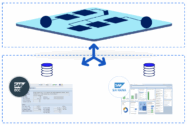
Navigating the SAP ECC to HANA Transition with Appian
Embracing Clean Core Strategy: Paving the Way for a Streamlined ERP Transition. Seamless Migration and Efficient Customization. The landscape of enterprise resource planning (ERP) systems is undergoing a significant transformation. SAP ECC, a cornerstone for many organizations, is approaching its end-of-life (2027), necessitating a shift to the more advanced SAP HANA. Moving from...…
-

HR Path Accelerates APAC SAP and HRIS Growth with Strategic Acquisition of Blueprint HR Software
HR Path has expanded its APAC presence by acquiring Blueprint HR Software Solutions, enhancing its SAP-centric human capital offerings and strengthening its foothold in high-growth markets like India and the UAE.
-

SAP BTP and S/4HANA: Why the Integration Decision You Make Today Will Define Your SAP Costs for Years
Most organisations implementing S/4HANA treat SAP Business Technology Platform (BTP) as a phase two consideration. They view it as a future luxury something to be bolted on once the core ERP is stable. That decision to defer BTP architecture until later is one of the most expensive mistakes in the modern SAP landscape. There is…
-

SAP Business Data Cloud: Managing Data Consistency Across Multi-Platform Environments
Most enterprise data environments are still fragmented. SAPinsider research shows only 3% of organisations report a unified, governed data layer, while 38% continue to operate across siloed environments. These conditions shape how data moves through financial, operational, and analytical processes, where inconsistencies slow decisions and increase reliance on manual reconciliation. SAP Business Data Cloud is…
-

New End-to-End Project Deployment Process in Solution Manager 7.1 and 7.2
Learn about developments done with multiple large corporations for the IT Requirement-to-Deploy process in SAP Solution Manager 7.1 and 7.2. Follow the management of the IT Service Management (ITSM) and Application Lifecycle Management (ALM) spaces from requirement management, to design, build, test, and deployment in an integrated fashion. Key Concept The Requirement-to-Deploy focus solution is...…
-

SAP & EY Unveil Integrated Finance Managed Service for S/4HANA Cloud
EY and SAP have launched the Integrated Finance Managed Service solution utilising SAP S/4HANA Cloud to streamline enterprise functions and enhance efficiency by combining advanced technology with domain expertise.
-

SAP Bets on India’s Future with €194M Bengaluru Campus
SAP has launched the SAP Labs India Innovation Park in Bengaluru, a €194 million investment designed to accommodate over 15,000 professionals and establish a global innovation hub focusing on AI and technology, reflecting India’s pivotal role in SAP’s R&D and strategy.
-

Breaking the Wait-and-See Cycle: Why SAP Users Need an Orchestration Layer Now
Don’t let your SAP S/4HANA migration stall business innovation. Discover how an orchestration layer like Appian handles cross-system complexity and regulatory fragmentation today while keeping your SAP core pristine.
-

IC WinClient or IC WebClient? How to Choose a Call Center Interface
Are you trying to decide between using Interaction Center (IC) WinClient or IC WebClient? With all the variations of interfaces, methods, and terminology, the limited information available to support these choices further complicates an already tricky situation. Find out about the differences between IC WinClient and IC WebClient for a mySAP CRM call center and...…
-
mySAP ERP Travel Management: Improve Your Control of Travel Planning and Expenses
/FinancialsCompliance with the Sarbanes-Oxley Act has prompted many organizations to analyze their existing internal travel and expenses controls to reduce risk. Learn how the latest version of mySAP ERP Travel Management automates business processes for travel policy enforcement and streamlines time-consuming administrative tasks. Key Concept MySAP ERP Travel Management supports the standard SAP Business Workflow...…
Related Vendors
Your request has been successfully sent