SAP Code Inspector
Code Inspector: Overview and Tutorials
What Is Code Inspector?
Code Inspector is a tool that can be used to check and control the quality of ABAP code. Code Inspector can be used to apply all of the tools provided by ABAP Workbench, at the same time.
The ABAP Workbench is a collection of tools that can be used to develop, test, and run ABAP programs.
Who Uses Code Inspector?
Developers and quality managers use Code Inspector.
A developer might use the Code Inspector tool to run a fast ad hoc inspection from ABAP Workbench or from the Code Inspector itself, or to define personal re-usable code inspections.
A quality manager might use Code Inspector to define public re-usable code inspections or approve or reject exceptions.
Code Inspector vs. ABAP Test Cockpit
ABAP Test Cockpit is the successor of Code Inspector. Conversations on SAP’s Community Wiki recommend that ABAP Test Cockpit be used instead of Code Inspector.
ABAP Test Cockpit delivers custom-code analysis in the ABAP programming language. It is used with SAP Business Suite, SAP NetWeaver, and SAP S/4HANA.
Available Tutorials for Code Inspector
Code Inspector: Overview and Tutorials
What Is Code Inspector?
Code Inspector is a tool that can be used to check and control the quality of ABAP code. Code Inspector can be used to apply all of the tools provided by ABAP Workbench, at the same time.
The ABAP Workbench is a collection of tools that can be used to develop, test, and run ABAP programs.
Who Uses Code Inspector?
Developers and quality managers use Code Inspector.
A developer might use the Code Inspector tool to run a fast ad hoc inspection from ABAP Workbench or from the Code Inspector itself, or to define personal re-usable code inspections.
A quality manager might use Code Inspector to define public re-usable code inspections or approve or reject exceptions.
Code Inspector vs. ABAP Test Cockpit
ABAP Test Cockpit is the successor of Code Inspector. Conversations on SAP’s Community Wiki recommend that ABAP Test Cockpit be used instead of Code Inspector.
ABAP Test Cockpit delivers custom-code analysis in the ABAP programming language. It is used with SAP Business Suite, SAP NetWeaver, and SAP S/4HANA.
Available Tutorials for Code Inspector
Some tutorials are still available for Code Inspector, many of which date back to 2015 or earlier.
- Jerry Wang wrote in 2015 that “ABAP code inspector (tcode SCI ) is not just a tool to ensure the correctness of your code. It is a powerful toolset for an ABAPer to make his life easier” in his SAP Community blog, “Useful tips regarding ABAP code inspector that you may not know.” His tutorial is based on NetWeaver 7.40 and discusses how to read the inspection results, along with other useful tips.
- SAP Documentation explains how to start Code Inspector and provides links to other related topics like authorizations, ad hoc inspections, and managing exceptions.
- An SAPinsider article published in 2017, “Secure Your ABAP Code Against Attack,” discusses both ABAP Test Cockpit and Code Inspector. “In the ABAP Test Cockpit, developers can execute static checks and unit tests for their development objects using SAP tools such as the Code Inspector for checking repository objects, the Extended Program Check (transaction SLIN) for running in-depth syntax checks, checks for ensuring a successful SAP HANA or SAP S/4HANA migration,* and SAP NetWeaver AS, add-on for code vulnerability analysis for scanning source code for vulnerabilities,” writes the author.
- Extra Li writes in a 2015 SAP Community blog, “Integrate ATC (ABAP Test Cockpit) or Code Inspector Check with ChaRM” that both Code Inspector and an ATC check can be triggered during a transport request and be integrated with ChaRM. But he says their behaviors will be different.
954 results
-

Live from SAPinsider Studio: Rohana Gunawardena on SAP CO
Rohana Gunawardena, Director, SAP Practice, QS&S, joins SAPinsider Studio at the SAPinsider FIN 2016 event in Las Vegas to discuss the SAP CO philosophy and using CO beyond cost center accounting, such as internal orders, as well as what SAP S/4HANA means for SAP CO. This is an edited version of the transcript: Ken Murphy,…
-

A Roadmap to the Digital Retailing Era
Ken Murphy, SAPinsider: This is Ken Murphy with SAPinsider. The evolution of technology and digital transformation is having a tremendous impact across industry types, but perhaps nowhere are these forces having a greater impact than retail and fashion. Traditional methods of selling goods and products to end consumers are quickly being replaced by omnichannel offerings…
-

What to Expect From Our SAPinsider 2020 Event: Insights From Rizal Ahmed, President and Head of Research, SAP S/4HANA and Cloud at SAPinsider
On March 17-19 in Vegas this year at SAPinsider’s 2020 conference the word that will be buzzing around every room in the Bellagio is SAP S/4HANA, and for good reason. From our research we know that moving to SAP’s latest upgrade is the most consuming, important decision and project that SAP customers are facing, and…
-

A Look at Current SAP Marketplace Trends
SAPinsider recently sat down with an expert in the SAPinsider community, Rohana Gunawardena, Director – SAP Practice, Exium Inc., to discuss some of the trends he’s seeing in the marketplace. A Major Priority for Finance Company CFOs A big priority for SAP customers in the finance industry right now, says Rohana, is making the monthly…
-
Your SAP Peers Want to Hear from You!
In talking with SAPinsider members we’ve learned that many of you have a real desire to share your strategic insights, business best practices, functional tips, and road-tested advice with your SAP peers. SAPinsider wants to harness that knowledge and catapult it out to the larger SAP community by partnering with you, our readers. We’re currently…
-

Members Who Inspire | Akash Kumar
Name: Akash Kumar Job Position: Solution Architect Company: HCL LinkedIn: https://www.linkedin.com/in/akashkumar1987/ Twitter: https://twitter.com/akashkumar1987 How did you first hear about SAPinsider? I first came across SAPinsider at the SAPinsider booth in the 2018 SAP SAPPHIRENOW Conference, which was my first ever SAPPHIRE event and have been a member since. If you had four more hours in your day,…
-

 Premium
SAPinsider 2022 Vegas : Data & Analytics Session Themes
SAPinsider events have been the most widely attended, independent networking and knowledge-sharing events in the SAP technology ecosystem for decades. After taking a hiatus from in-person events for a couple of years, due to the pandemic, SAPinsider was back with a bang this year. SAPinsider 2022 saw 3000+ members in attendance in Vegas in July…
-
- Premium
The Increasing Importance of SAPinsider DART Methodology
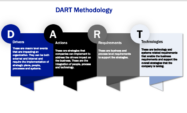
SAPinsider will be publishing Inventory Management and Optimization research reports in November 2022. If you are familiar with our research, you know that we use a proprietary framework called DART, which stands for Drivers, Action, Requirements, and Technology, to conduct our research. While we explain the methodology extensively in our reports and webinars, we believe…
-

Leverage ease of compliance, scalability to make the case for finance transformation
Around 25 percent of SAP customers globally have moved to SAP S/4HANA Finance and around 24 percent are currently implementing the solution, according to research from SAPinsider (note: Mastering SAP and SAPinsider are part of the Wellesley group of companies). SAPinsider’s Benchmark report, SAP S/4HANA Finance State of the Market 2024, surveyed 124 SAP customers…
-

Finding the Right Solution for Asset-heavy Industries
Enterprise asset management (EAM) lives and thrives on foolproof planning and scheduling. That’s a given – but today, we live in a world where there aren’t many givens regarding outside forces affecting supply chains and operations. This is especially true for asset-heavy industries such as energy and infrastructure. Underinvesting in planning and scheduling can lead…
Related Vendors


Your request has been successfully sent