SAP Platform and Technology
SAP Business Technology Platform | SAP Cloud Connector | SAP Cloud Integration Platform | SAP Cloud Migration | SAP Cloud Platform | SAP Cloud Providers | SAP Cloud Strategy | SAP Container Platform | SAP Digital Asset Management | SAP Digital Integration Hub | SAP Digital Signature | SAP HANA Enterprise Cloud | SAP HEC | SAP Hyperscalers | SAP Infrastructure | SAP Messaging | SAP Smart Forms
What is SAP Platform and Technology?
SAP Platform and Technology history started with mainframe-based applications, with the first official release being the SAP R/2 solution. This was eventually replaced by SAP R/3 which was the first application running a 3-tier client/server architecture. A client/server architecture continues to be the model for on-premise applications sold by SAP, even when those applications are often running on some form of cloud infrastructure. The newest SAP applications use a purely cloud-based infrastructure and are often software-as-a-service solutions.
What is SAP Platform and Technology?
SAP Platform and Technology history started with mainframe-based applications, with the first official release being the SAP R/2 solution. This was eventually replaced by SAP R/3 which was the first application running a 3-tier client/server architecture. A client/server architecture continues to be the model for on-premise applications sold by SAP, even when those applications are often running on some form of cloud infrastructure. The newest SAP applications use a purely cloud-based infrastructure and are often software-as-a-service solutions.
While these represented the infrastructure on which SAP solutions were built, SAP customers also needed platforms on which to build and develop applications. The first solution that SAP released was the SAP NetWeaver platform which was a software stack for many of SAP’s applications. First released in 2004, SAP NetWeaver consisted of an ABAP software stack as well as a Java development stack. This allowed organizations to build and deploy applications using business APIs and integration capabilities to other SAP solutions.
Building on the success of SAP NetWeaver, SAP released the SAP Cloud Platform as a similar resource for organizations looking to build cloud-based applications. More recently, SAP brought the SAP Cloud Platform together with other services and technologies to release the SAP Business Technology Platform (BTP). Key capabilities of SAP BTP include database and data management, analytics, application development and integration, and intelligent technologies like artificial intelligence and machine learning.
One of the most important capabilities of SAP solutions has been the ability to enhance them by creating customizations and extensions. Implementations of SAP ERP systems like SAP ECC frequently involved thousands or even hundreds of thousands of lines of customized code based on SAP ABAP and written using platforms like SAP NetWeaver. New solutions like SAP S/4HANA focus on extensions which provide additional functionality without requiring underlying code changes using SAP BTP as the means for achieving these extensions.
SAP BTP is also the technology solution that SAP organizations are looking to use to leverage to build on their investments in SAP S/4HANA.
From a technology and infrastructure perspective, nearly nine in ten SAP customers are now running at least some SAP workloads in the cloud. Underlying data repositories are also more likely to be moving to cloud-based infrastructure.
SAP has many implementation partners that will either provide a technology platform on which SAP solutions can run or will assist with the development of applications that leverage technologies like SAP BTP. Examples of partners providing infrastructure include Dell Technologies, HPE, and Intel. Cloud providers for SAP services include AWS, Google Cloud, and Microsoft. Implementation partners also assist organizations with building on this SAP Platform and Technology.
1494 results
-

A Comprehensive Guide for Using SAP Lumira Server with the SAP BusinessObjects BI Platform
Gain an overview of the technical prerequisites for installing the SAP Lumira, server for Business Intelligence (BI) platform, add-on. Learn about workflows and the functionality that is now available to your users with SAP Lumira, server for BI platform, and the steps for using these new capabilities. Key Concept SAP Lumira has mainly been seen...…
-

Identity and Access Management in Cloud and Hybrid SAP Landscapes
While ensuring appropriate user access to your enterprise systems has always been a difficult task, it has become profoundly more challenging as IT landscapes have grown more complex with changing user roles and new technologies. To help you meet this challenge, SAP provides a comprehensive set of solutions — SAP Single Sign-On, SAP Cloud Platform…
-
Why Integrating SAP and Non-SAP Systems is No Longer Optional
The modern enterprise landscape is shifting towards a hybrid model where 52% of organisations now use SAP alongside a diverse range of third-party applications, highlighting the critical need for effective integration strategies to optimise functionality and streamline processes amid increasing complexity.
-
How Suntory Reinvented Its Supply Chain with DXC and SAP
Suntory Oceania successfully navigated a complex integration of a new $400 million production facility with its existing SAP S/4HANA system, emphasizing the importance of automation and phased rollouts alongside physical construction to enhance supply chain efficiency and set a foundation for global scalability.
-
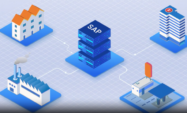
Westernacher Consulting Shines in Sustainability and Supply Chain Transformation
Westernacher Consulting, founded three years before SAP, is a long-term partner known for its expertise in supply chain solutions, strategic implementations with SAP technologies, and a commitment to sustainability, establishing a strong presence in the APAC region and offering tailored workshops to enhance clients’ supply chain performance.
-

Why Shop-Floor Execution Is Still the Blind Spot of SAP® Manufacturing
Despite advancements in data accessibility within SAP for manufacturing, a significant gap persists between planning and execution on the shop floor, where reliance on traditional methods undermines real-time visibility and responsiveness, necessitating a shift to integrating execution data seamlessly to enhance operational efficiency.
-
Work Management Data: The Pulse of Everyday Operations
Work management data powers daily operations. This thought leadership piece explores how transactional data—work orders, labour logs, material usage—drives performance across EAM and SCM. Learn how disciplined processes and governance can turn this data into a strategic asset.
-

SAP Boosts AI Growth Throughout Asia Pacific with New Business Wins
SAP has reported notable AI-driven growth in the Asia Pacific region, with significant new customer acquisitions and successful AI and cloud ERP implementations, highlighting the increasing adoption of integrated solutions that enhance operational resilience and accelerate digital transformation.
-

Securing the Cloud with SAP Cloud Platform
Security is a major concern for anyone considering a move to the cloud ― along with the benefits of digitizing come increased risks due to code vulnerabilities, missing implementation of security patches, and misconfigurations, among others. So how do you make a successful transition to the digital economy without compromising your business? Learn how SAP…
-

Comply with Mandatory E-Invoicing with Confidence
Over the years, companies have been replacing paper invoices with electronic versions to improve agility and to gain better insights into their business. In recent years, however, tax authorities and governmental organizations in an increasing number of countries have begun enforcing the use of electronic invoicing (e-invoicing) by law to combat fraud and save costs,…




Your request has been successfully sent