SAP FICO
SAP FICO: An Overview and Key Considerations
What Is SAP FICO?
SAP FICO is SAP’s core functional module consisting of the tightly integrated Financial Accounting (FI) and Cost Controlling (CO) modules, designed to enable the recording of financial transactions across parent and subsidiary entities, the production of financial statements, and support both internal and external reporting, at the end of every period.
The SAP Financial Accounting (FI) module supports accurate financial accounting and financial reporting, while the SAP Cost Controlling (CO) module facilitates cost planning and cost monitoring.
Key sub-modules for SAP FICO:
- Financial Accounting (FI)
- Asset Accounting
- Accounts Payables
- Accounts Receivable
- Bank Accounting
- Fund Management
- General Ledger Accounting
- Travel Management
- Cost Controlling (CO)
- Activity-based Costing
- Cost Center Accounting
- Cost Element Accounting
- Internal Orders
- Product Costing
- Profit Center Accounting
- Profitability Analysis.
The primary objectives of SAP FICO are to provide financial transparency, improve data consistency, and enable business process integration within the organization. Organizations can leverage the inter-connected sub-modules and real-time data streaming to produce trial balances that accurately reflect most business processes from various industries. SAP FICO is an end-to-end solution that combines industry best practices with application expertise, deep-process knowledge, and technical innovation.
Key Considerations for SAPinsiders
SAP FICO: An Overview and Key Considerations
What Is SAP FICO?
SAP FICO is SAP’s core functional module consisting of the tightly integrated Financial Accounting (FI) and Cost Controlling (CO) modules, designed to enable the recording of financial transactions across parent and subsidiary entities, the production of financial statements, and support both internal and external reporting, at the end of every period.
The SAP Financial Accounting (FI) module supports accurate financial accounting and financial reporting, while the SAP Cost Controlling (CO) module facilitates cost planning and cost monitoring.
Key sub-modules for SAP FICO:
- Financial Accounting (FI)
- Asset Accounting
- Accounts Payables
- Accounts Receivable
- Bank Accounting
- Fund Management
- General Ledger Accounting
- Travel Management
- Cost Controlling (CO)
- Activity-based Costing
- Cost Center Accounting
- Cost Element Accounting
- Internal Orders
- Product Costing
- Profit Center Accounting
- Profitability Analysis.
The primary objectives of SAP FICO are to provide financial transparency, improve data consistency, and enable business process integration within the organization. Organizations can leverage the inter-connected sub-modules and real-time data streaming to produce trial balances that accurately reflect most business processes from various industries. SAP FICO is an end-to-end solution that combines industry best practices with application expertise, deep-process knowledge, and technical innovation.
Key Considerations for SAPinsiders
Leverage SAP FICO to generate timely insights within current processes. Organizations typically modernize ERP financial landscapes in phases and not all at once. As a result, finance and accounting managers must incorporate processes across multiple technologies, including legacy or manual solutions, to deliver business benefits. The flexibility of SAP FICO supports this option, as Mark Pockl, insightsoftware’s Solution Engineer, specializing in SAP and Orace EBS reporting solutions, provides best practices for leveraging SAP FICO inside Excel.
SAP FICO automation can enable the standardization of financial processes. With SAP FICO, finance teams are equipped with standard solutions capable of supporting automation across many manual processes related to financial transactions and reporting. This helps finance teams, including the finance departments at Kellogg Company and Newell Brands, effectively manage financial data within SAP ERP systems, including generating reports that different departments require for decision-making.
Economic disruptions increase the need for financial visibility across organizations. SAP FICO is designed to support multiple views of your organization in real time, providing visibility for finance managers at the most critical junctures. In addition, by accurately and quickly managing cost planning and cost monitoring requirements consistently across the business units, organizations can generate ad-hoc reporting from costing and profitability insights.
528 results
-

CERPASS® Expands Globally: Now available on the SAP BTP European Data Centre
CERPASS® has expanded its global presence by being hosted in the SAP BTP European Data Centre, offering EU customers enhanced data security, compliance with GDPR, reliable performance, and seamless integration with existing SAP systems, while also ensuring adherence to data sovereignty regulations.
-

Unlock seamless SAP change management with Rev-Trac’s Enhanced References
Rev-Trac’s Enhanced References feature streamlines SAP change management by linking multiple Jira subtasks, ServiceNow records, and automated test cases to a single SAP change request, thereby improving tracking, governance, and integration across IT operations and development.
-

Implementing SAP Integration Suite
As SAP organisations prepare for the end of maintenance for SAP ECC and the impending end-of-life for SAP Process Orchestration and Cloud Platform Integration by 2028, they should consider migrating to SAP Integration Suite to enhance integration capabilities and drive operational efficiency while leveraging this transition as an opportunity for modernisation and scalability.
-

Critical Zero-Day Vulnerability Impacts SAP
SAP issued a security alert on April 24, 2025, regarding a critical vulnerability (CVE-2025-31324) in the Metadata Uploader of SAP NetWeaver Visual Composer, which is actively exploited, scoring a CVSS of 10, and has necessitated an emergency patch and immediate action from organisations to mitigate potential breaches.
-

The Ultimate Guide to SAP RFC: Streamlining Communication and Ensuring Robust Security
Securing and streamlining communication between SAP systems and external applications is critical for optimizing efficiency; this is where the SAP Remote Function Call (RFC) comes into play. RFC offers seamless integration and coherent communication between software systems, which today are indispensable components to an organization’s success in this rapidly changing digital world. This article will…
-
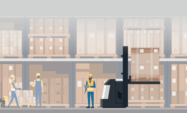
How Suntory Reinvented Its Supply Chain with DXC and SAP
Suntory Oceania successfully navigated a complex integration of a new $400 million production facility with its existing SAP S/4HANA system, emphasizing the importance of automation and phased rollouts alongside physical construction to enhance supply chain efficiency and set a foundation for global scalability.
-

Why Your E-Commerce Architecture Needs SAP Commerce Cloud at Its Core
Businesses in digital trade must constantly innovate to stay ahead of the competition and provide the greatest consumer experiences. This modification involves SAP Commerce Cloud and modern e-commerce architecture. SAP Commerce Cloud’s cloud-native technology allows organisations to develop, leverage multiple platforms, and acquire customised data. Modern enterprise e-commerce with SAP uses microservices, headless commerce, and API-first to adapt…
-

The Evolving SAP Landscape: The Future of SAP from Women in the Industry
Women in SAP-centric roles across various industries are confidently embracing advancements in AI, digital transformation, data-driven decision making, and customer-centricity while also prioritising sustainability, ethical practices, leadership, collaboration, inclusivity, and adaptability to shape an ambitious and innovative future in technology.
-

The AI Revolution Runs on SAP Data. Is Yours Ready?
The integration of SAP systems with AI through platforms like Boomi empowers users to extract real-time data without coding, significantly accelerating AI initiatives and freeing skilled developers.
-

Best Practices Migrating to the New General Ledger A Three Phase Approach
Use this three-phased approach to upgrade to the new G/L in mySAP ERP.MySAP ERP 2005 includes a migration tool to assist in the upgrade project. Key Concept By selecting the option to upgrade to SAP’s new General Ledger structure, you must understand this is a full-blown consulting project, and should be treated as such. mySAP...…
Related Vendors

Your request has been successfully sent