SAP FICO
SAP FICO: An Overview and Key Considerations
What Is SAP FICO?
SAP FICO is SAP’s core functional module consisting of the tightly integrated Financial Accounting (FI) and Cost Controlling (CO) modules, designed to enable the recording of financial transactions across parent and subsidiary entities, the production of financial statements, and support both internal and external reporting, at the end of every period.
The SAP Financial Accounting (FI) module supports accurate financial accounting and financial reporting, while the SAP Cost Controlling (CO) module facilitates cost planning and cost monitoring.
Key sub-modules for SAP FICO:
- Financial Accounting (FI)
- Asset Accounting
- Accounts Payables
- Accounts Receivable
- Bank Accounting
- Fund Management
- General Ledger Accounting
- Travel Management
- Cost Controlling (CO)
- Activity-based Costing
- Cost Center Accounting
- Cost Element Accounting
- Internal Orders
- Product Costing
- Profit Center Accounting
- Profitability Analysis.
The primary objectives of SAP FICO are to provide financial transparency, improve data consistency, and enable business process integration within the organization. Organizations can leverage the inter-connected sub-modules and real-time data streaming to produce trial balances that accurately reflect most business processes from various industries. SAP FICO is an end-to-end solution that combines industry best practices with application expertise, deep-process knowledge, and technical innovation.
Key Considerations for SAPinsiders
SAP FICO: An Overview and Key Considerations
What Is SAP FICO?
SAP FICO is SAP’s core functional module consisting of the tightly integrated Financial Accounting (FI) and Cost Controlling (CO) modules, designed to enable the recording of financial transactions across parent and subsidiary entities, the production of financial statements, and support both internal and external reporting, at the end of every period.
The SAP Financial Accounting (FI) module supports accurate financial accounting and financial reporting, while the SAP Cost Controlling (CO) module facilitates cost planning and cost monitoring.
Key sub-modules for SAP FICO:
- Financial Accounting (FI)
- Asset Accounting
- Accounts Payables
- Accounts Receivable
- Bank Accounting
- Fund Management
- General Ledger Accounting
- Travel Management
- Cost Controlling (CO)
- Activity-based Costing
- Cost Center Accounting
- Cost Element Accounting
- Internal Orders
- Product Costing
- Profit Center Accounting
- Profitability Analysis.
The primary objectives of SAP FICO are to provide financial transparency, improve data consistency, and enable business process integration within the organization. Organizations can leverage the inter-connected sub-modules and real-time data streaming to produce trial balances that accurately reflect most business processes from various industries. SAP FICO is an end-to-end solution that combines industry best practices with application expertise, deep-process knowledge, and technical innovation.
Key Considerations for SAPinsiders
Leverage SAP FICO to generate timely insights within current processes. Organizations typically modernize ERP financial landscapes in phases and not all at once. As a result, finance and accounting managers must incorporate processes across multiple technologies, including legacy or manual solutions, to deliver business benefits. The flexibility of SAP FICO supports this option, as Mark Pockl, insightsoftware’s Solution Engineer, specializing in SAP and Orace EBS reporting solutions, provides best practices for leveraging SAP FICO inside Excel.
SAP FICO automation can enable the standardization of financial processes. With SAP FICO, finance teams are equipped with standard solutions capable of supporting automation across many manual processes related to financial transactions and reporting. This helps finance teams, including the finance departments at Kellogg Company and Newell Brands, effectively manage financial data within SAP ERP systems, including generating reports that different departments require for decision-making.
Economic disruptions increase the need for financial visibility across organizations. SAP FICO is designed to support multiple views of your organization in real time, providing visibility for finance managers at the most critical junctures. In addition, by accurately and quickly managing cost planning and cost monitoring requirements consistently across the business units, organizations can generate ad-hoc reporting from costing and profitability insights.
528 results
-
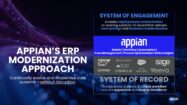
The End of the Wait-and-See Era for ERP Modernization
If you’re an SAP customer, you’ve probably heard the same pitch more than once: just wait a little longer. Your migration to S/4HANA will unlock the agility you need. Your SAP Business Technology Platform (BTP) investments will catch up soon. Your workflows will get faster. Your data will become more accessible. Just a little more…
-

SAP Business Data Cloud: A Game-Changer for Enterprise Data Management
SAP has unveiled SAP Business Data Cloud, a revolutionary advancement in enterprise data management. In SAP’s press release, Jason Heaney, co-CEO of DyFlex Solutions, emphasised that as an SAP Platinum Partner, this transformation is a game changer, enabling DyFlex to provide even greater value to its customers. A New Era for Data Products and AI Insights…
-

SAP Joule for Consultants: Accelerating Enterprise AI Delivery and Cloud Migrations
Explore how Tech Mahindra’s adoption of SAP Joule for Consultants accelerates AI-driven enterprise transformation, and why choosing an AI-equipped partner lowers TCO.
-

SAP BTP Demand Forecasting: How Nippon Ham Is Rethinking Its Supply Chain
Nippon Ham deploys AI on SAP BTP to improve demand forecasting and inventory allocation as part of its SAP S/4HANA Connect Project, driving more consistent supply chain decisions.
-
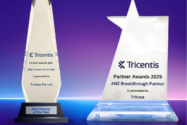
Tritusa Named Tricentis ANZ Partner of the Year 2026
A Milestone Achievement in AI-Led Quality Engineering & SAP Transformation Recognition That Reflects Enterprise Outcomes The Tricentis ANZ Partner of the Year – 2026 award recognises Tritusa’s delivery of enterprise-grade quality engineering and test assurance across complex, large-scale programs. More importantly, it reflects our ability to help organisations: Reduce release risk without slowing delivery Optimise regression testing…
-
Making the Business Case for SAP Cloud ERP Private (RISE): The Licensing Insights Every CIO Needs for Effective Decision Making
Over the next five years, one of the most pressing decisions many CIOs and IT leaders will face is whether to remain on-premise with SAP S/4HANA or to transition to SAP Cloud ERP Private Edition. The stakes are high—not only from a technology perspective but also from a financial one, as licensing and subscription models…
-

Ask the FI/CO Expert: “Is CATT the Best Tool for Changing Field Values in Master Data Records Automatically, or Is There a Less Cumbersome Way to Get the Job Done?”
“Ask the FI/CO Expert” is a monthly Q&A column where readers can ask FI/CO Expert senior consultants questions on difficulties they’ve encountered using R/3 functionality. The question for this month’s column concerns doing mass updates to accounting information on customer masters. A guest FI/CO Expert senior consultant from ICM America carefully details, step by step,...…
-
Prepare Your R/3 System Now for the International Accounting Standards Deadline
Impending deadlines for compliance with the International Accounting Standards (IAS) will require hard work on the part of many accountants and R/3 specialists. The problem posed by IAS is that, in most cases, two or more sets of figures have to be managed because of the differences among IAS, US GAAP, and national fiscal reporting....…
-

Use Subsequent Activation of Open Item Management for Better Control Over Your SAP General Ledger Account
Sometimes business users need to convert a non-open item managed account into an open item managed account and convert the existing line items of the account into open items. This step is sometimes required by businesses to have better control over their SAP General Ledger accounts. It helps in controlling and clearing the transactions. SAP...…
-
Automate Accrual Calculation and Posting for Improved Flexibility
See the process of percentage-based cost center-wise accrual calculation. You can then automate the subsequent financial posting using standard SAP functionality. Key Concept Accrual calculation is the process of evenly spreading irregularly occurring costs over the periods involved and distributing them according to the cost origin. You perform accrual calculation in the Controlling (CO) module...…
Related Vendors


Your request has been successfully sent