SAP T Code
What Are SAP T-Codes?
An SAP transaction code (T-Code) is a four-character shortcut that is used to access a transaction within an SAP system or application. Transaction codes provide direct access to the desired transaction from anywhere within the SAP system. Instead of using the menu or another means of accessing the transaction, you can start a function in a single step using an SAP T-Code. T-Codes can provide access to everything from user maintenance or authorization, workflow management, accessing SAP ABAP tables and dictionaries, running SQL queries, or transaction control. Every function in an SAP ERP system has a T-code associated with it. There are thousands of transaction codes available in different SAP systems and applications.
What Are SAP T-Codes?
An SAP transaction code (T-Code) is a four-character shortcut that is used to access a transaction within an SAP system or application. Transaction codes provide direct access to the desired transaction from anywhere within the SAP system. Instead of using the menu or another means of accessing the transaction, you can start a function in a single step using an SAP T-Code. T-Codes can provide access to everything from user maintenance or authorization, workflow management, accessing SAP ABAP tables and dictionaries, running SQL queries, or transaction control. Every function in an SAP ERP system has a T-code associated with it. There are thousands of transaction codes available in different SAP systems and applications.
Use of T-Code is performed by logging onto the SAP application using the SAP GUI or SAP Front End, placing the cursor in the SAP command field, typing the transaction code, then pressing enter. Depending on the role that a user plays within an organization, they will have different T-codes that are important to them. Administrators may focus on transactions related to that topic, while developers may use those connected to ABAP or SQL queries. Business users may use T-codes that relate to processing their daily tasks. Users can add T-codes that they use most frequently to a favorites list that allows them to access them more readily. SAP systems also provide the capability for users to create custom SAP T-codes by using the transaction SE91.
Key Considerations for SAPinsiders
- If you’re moving to SAP S/4HANA and rely on transaction codes, then you need to determine what has changed. SAP has changed a number of things with the SAP S/4HANA release, and one of them is the T-codes that are available. This event session by Arghadip Kar walks through how to find which transaction codes have been deleted or placed in SAP S/4HANA that were available in SAP ECC. It also helps organizations that are planning for the move to SAP S/4HANA to plan around customizations in their existing system that may use decommissioned transaction codes.
- You can map standard transaction codes to common phrases to make them easier to use and remember. A functionality that SAP provides is that of creating custom T-codes. But many users struggle with remembering the names of transaction codes despite the regularity of working with them. This article by Muhammad Ramzan walks through mapping standard transaction codes to common phrases to make them easier to remember, and easier to access from custom code. Following this approach ensures that authorization checks are not bypassed, and the authorizations to the actual transactions remain intact.
943 results
-

How to Set Up the Fiori Clear Incoming Payments App for Use in a Launchpad
SAP S/4HANA Finance delivers improved business processes with a new user experience. Transactions that have not been changed in 15 years have received a complete face-lift, and how users access the transactions within their processes has also completely changed. Learn the technical aspects of the Fiori interface implementation based on a classic accounts receivable (FI-AR)...…
-

 Premium
Special Report: Implementing SAP HANA – An End-to-End Perspective
In this exclusive special report, get an in-depth, step-by-step look at the aspects of implementing BI solutions on SAP HANA. Gain insight into how ETL integrates with SAP HANA and how SAP BusinessObjects BI 4.0 analyzes and visualizes the data stored in SAP HANA. Key Concept SAP HANA modeling is a process whereby a developer...…
-
Data Owner Responsibilities and Characteristics
Authored by Vinod Reddy, Data Migration and SAP MM Techno Functional Consultant, Utopia, Inc. Every enterprise will definitely have the objective to improve efficiency and effectiveness in managing data. Efficiency will result in minimizing the cost of administering data and effectiveness will result in maximizing the data quality. From my perspective, a data owner should…
-
Live from SAPinsider Studio: Blair Wheadon on SAP Design Studio 1.6
Blair Wheadon, General Manager, Data Discovery, SAP, joins SAPinsider Studio during the 2015 SAPinsider Reporting & Analytics event in Las Vegas to discuss SAP BusinessObjects Design Studio 1.6 and SAP Cloud for Analytics. This is an edited transcript of the discussion: Ken Murphy, SAPinsider: Hi, this is Ken Murphy with SAPinsider. I am here at…
-
Live from SAPinsider Studio: Red Hat and Support for the IoT Movement
Bob Mahoney, Red Hat IoT Business Development, joins SAPinsider Studio at the 2016 SAPinsider IoT conference to discuss how Red Hat supports the growing IoT movement and community. Topics of this discussion include fundamental use cases of middleware and a joint Red Hat and SAP platform that turns data into actionable intelligence. This is an…
-
Live from SAPinsider Studio: Invoice-to-Pay with SAP S/4HANA and Ariba
Friederike Hertenstein, Director, Accounts Payable, SAP Solution Management Finance, visited with SAPinsider Studio at the 2016 SAPinsider Financials event in Las Vegas to discuss Invoice to Pay and Sourcing to Pay processes in SAP S/4HANA Finance and the importance of integrating invoicing with the Ariba Network. This is an edited transcript of the discussion: Ken…
-

Live from SAPinsider: Ivo Bauermann on the Digital Imperative
SAPinsider FIN-GRC 2016 keynote speaker Ivo Bauermann, Global Vice President and General Manager, Enterprise Performance Management, SAP, joins SAPinsider Studio at the event to discuss how SAP is helping companies make a digital transformation and run a “live” business. Topics covered include SAP S4/HANA, Central Finance, and Finance’s evolution into a strategic arm of the…
-
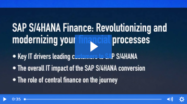
Live from SAPinsider Studio: Paul Ovigele of ERPfixers on S/4HANA and Universal Journal
Paul Ovigele, founder of ERPfixers, joins SAPinsider Studio at the SAPinsider FIN-GRC event to discuss the impact the Universal Journal in SAP S/4HANA Finance has for reconciling accounts-based vs. costing-based CO-PA tables with the general ledger. This is an edited transcript of the discussion: Ken Murphy, SAPinsider: Hi, this is Ken Murphy with SAPinsider. I…
-
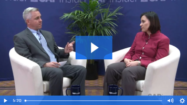
Live from SAPinsider Studio: Beam Suntory’s SAP Role Redesign
Ivanka Gajecky, Manager of Application Security, Beam Suntory, joined SAPinsider Studio at the SAPinsider GRC 2016 event to discuss Beam Suntory’s SAP security role redesign project that was undertaken to align with the business becoming more centralized. This is an edited transcript of the discussion: Ken Murphy, SAPinsider: Hi, this is Ken Murphy with SAPinsider.…
-

Live from SAPinsider Studio: O.C. Tanner Rejuvenates its SAP Environment to Keep Up with Customer Needs
Ethan Kennelly, Director of Enterprise Architecture and Program Management at O.C. Tanner, joins SAPinsider Studio at the SAPinsider SCM-CRM event to discuss how O.C. Tanner’s implementations of SAP Hybris, SAP Configure Price Quote, and SAP S/4HANA helped it to keep up with rapidly changing customer needs. This is an edited transcript of the discussion: Natalie…
Related Vendors


Your request has been successfully sent