SAP Learning Organization
SAP Learning Organization is an organizational unit within SAP SuccessFactors that helps to manage and deliver training content to users. This comprehensive and coordinated approach to employee training and development seeks to improve talent management, align learning outcomes with performance goals, boost compliance, and train external audiences. These courses have been used by over 1,000 companies across more than 50 countries worldwide.
SAP Learning Organization is a grouping of a company’s employees for the purpose of assigning training. Learning Organizations usually map to organizations that you track in the rest of SAP SuccessFactors, but not always. By offering a variety of learning experiences, including classroom training, e-learning, and on-the-job training, the program is designed to meet the needs of SAP employees at all levels of the organization, from new hires to experienced professionals. SAP Learning Organization courses are also available in a variety of languages, making them accessible to employees around the world.
Key Capabilities of SAP Learning Organization include:
SAP Learning Organization is an organizational unit within SAP SuccessFactors that helps to manage and deliver training content to users. This comprehensive and coordinated approach to employee training and development seeks to improve talent management, align learning outcomes with performance goals, boost compliance, and train external audiences. These courses have been used by over 1,000 companies across more than 50 countries worldwide.
SAP Learning Organization is a grouping of a company’s employees for the purpose of assigning training. Learning Organizations usually map to organizations that you track in the rest of SAP SuccessFactors, but not always. By offering a variety of learning experiences, including classroom training, e-learning, and on-the-job training, the program is designed to meet the needs of SAP employees at all levels of the organization, from new hires to experienced professionals. SAP Learning Organization courses are also available in a variety of languages, making them accessible to employees around the world.
Key Capabilities of SAP Learning Organization include:
- Talent management: Suite of tools and processes to help organizations identify, assess, and develop the skills of their employees.
- Learning alignment: Organizations can align learning outcomes with business goals and objectives.
- Compliance: Helps organizations ensure compliance with external regulations and internal policies.
- Training: Offers a wide range of training solutions for employees, partners, and customers.
Key pillars of SAP Learning Organization include:
- SAP Learning Hub – A cloud-based learning platform that provides access to SAP training content, expert instructors, and a community of SAP users.
- SAP Training and Certification – A program that offers certification exams and coursework to help SAP customers and partners validate their skills and knowledge.
- SAP Partner Academy – A program that provides SAP partners with the training and resources they need to build, market, and sell SAP solutions.
- SAP User Group Academy – A program that provides SAP user group members with access to SAP training content and experts.
Key Considerations for SAPinsiders:
- Tailor SAP learning programs to meet the needs of your organization. Organizations who want to create user groups for their learners have the option to use programs or curricula. The main difference between the two is that curricula are used when there is a need for compliance, while programs are used when there is not. While both have their strengths, curricula are generally better suited for regulated industries where there is a risk of being fined for not properly certifying employees. SAP Learning Organization provides an example of how to set up a curriculum. This approach can be beneficial for companies who need to ensure compliance with industry regulations.
- Ensure that employees are up-to-date on the latest industry compliance trends and developments. SAP Learning Organizations can help companies govern when a user can participate in a particular learning item. For example, a company may require approval from a supervisor before allowing an employee to take a course on compliance. By using SAP Learning Organizations, companies can help ensure that their employees are properly trained on compliance issues.
- Leverage flexible approach to group learning. The “SAP Learning Organization” is different from things like “department” or “division”, which are used for other purposes. The “SAP Learning Organization” helps to express how a company is divided for the purpose of assigning training. For example, even though users may be part of different departments or divisions, they can be treated as part of the same “SAP Learning Organization” because the same courses may be assigned to all of them based on how they’re organized in the company. This helps to ensure that users are receiving the correct training for their needs.
1307 results
-

Succeeding with Artificial Intelligence
As artificial intelligence emerges from a concept to technology used in actual solutions for business challenges, organizations need to find tools to handle this emerging reality.
-

 Premium
Combining Operations Research (OR) and Machine Learning (ML)
If you are an active resident of analytics land, you know that Artificial Intelligence (AI) and Machine Learning (ML) tools are the new bosses in town. Every tool, technology, and technology solution around you tries to incorporate them in their solution in some form. And all this limelight on AI and ML has pushed the…
-
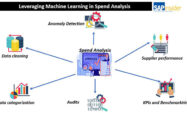
Leveraging Machine Learning (ML) in Spend Analysis solutions
Machine Learning (ML) based algorithms are slowly percolating into a wide variety of supply chain solutions and spend analysis solutions are no exception. In this article, I share few ways Machine Learning (ML) algorithms are already being used or can be used in spend analysis context. Note that these suggestions are focused only on spend…
-

Breaking Down SAP’s SwoopTalent Acquisition
SAP recently acquired SwoopTalent, but not for SwoopTalent’s current go-to-market strategy. SAP intends to bring SwoopTalent’s underlying models into SAP SuccessFactors. In the article, find out: – How SAP hopes to bolster its skilling and upskilling recommentations with SwoopTalent – Why that fits into the upcoming SAP SuccessFactors Opportunity Marketplace – What this means for…
-
- Premium
Machine Learning for Supply Chain Data Quality Management
Machine Learning (ML) based algorithms are slowly percolating into a wide variety of supply chain planning solutions. However, they play a key role in foundational aspects of supply chain planning as well, particularly in data quality management. Data quality has emerged as one of the aspects SAPinsiders have highlighted in their responses to our upcoming…
-

Shared Master Data Management with SAP Access Control and SAP Process Control
SAP Access Control and SAP Process Control have common master data elements that are consumed by both applications. Jitan Batra explains how the architectural shift back to ABAP for SAP Access Control 10.0 not only allows SAP Access Control and SAP Process Control to coexist in the same system, but also allows sharing of common...…
-
What’s New in mySAP CRM 2005
Discover the enhancements offered in mySAP CRM 2005, which SAP expects to release by the end of the year. Also find out what is involved with an upgrade to mySAP CRM 2005, whether you are new to SAP CRM or you use SAP CRM 2.x, SAP CRM 3.x, or SAP CRM 4.x. Key Concept mySAP...…
-

SAP Brings AI to Everything, Everywhere at Sapphire
The Day 1 keynote of Sapphire highlighted SAP’s focus on AI integration within its Business Suite and partnerships aimed at simplifying migrations to cloud solutions.
-

SAP ECC End of Life 2027: Your Step-by-Step Migration Roadmap to S/4HANA
Relying on legacy systems to carry out different business processes is a common practice. Whether it’s a large enterprise with a vast consumer base or a startup targeting local audiences, most enterprise-level applications still depend on outdated systems. One such example is SAP ECC (SAP ERP Central Component), a once-renowned software for businesses of all…
-

- Premium
Unlock Data’s Value in SAP Integration Programs
SAP system integrations go beyond SAP – 90% of organizations support non-SAP to SAP integration, while only 78% perform SAP to SAP integration, according to SAPinsider research. This means that when defining a data integration strategy, organizations need to prepare to work with data in both their SAP systems and non-SAP systems. Unlocking the full…
Related Vendors


Your request has been successfully sent