SAP Process Orchestration
What is Process Orchestration?
Businesses run on a plethora of business processes. In today’s rapidly digitizing world, it means that they may need to be supported by a multitude of systems. To build best-of-breed processes, organizations need to understand their current state better and make sure that it’s well orchestrated. While point systems may be capturing data, this data is fragmented and does not provide a holistic view of the end-to-end data flow. Process orchestration ensures that these disparate data sources work in sync with each other, when required, with data sharing and a combined intelligence and analytics platform. This provides organizations with the required insights to reduce friction, identify efficiency opportunities, and build best-in-class processes within a combined portfolio.
What is Process Orchestration?
Businesses run on a plethora of business processes. In today’s rapidly digitizing world, it means that they may need to be supported by a multitude of systems. To build best-of-breed processes, organizations need to understand their current state better and make sure that it’s well orchestrated. While point systems may be capturing data, this data is fragmented and does not provide a holistic view of the end-to-end data flow. Process orchestration ensures that these disparate data sources work in sync with each other, when required, with data sharing and a combined intelligence and analytics platform. This provides organizations with the required insights to reduce friction, identify efficiency opportunities, and build best-in-class processes within a combined portfolio.
Examples of Process Orchestration Tools Available in SAP ecosystem
There are several process orchestration tools available in the SAP ecosystem. SAP’s acquisition of Signaviolast year illustrates the growing importance of process intelligence. Due to the rising importance, there are now several vendors in this space, including key ones like SAP, Celonis, Kofax, UiPath, IBM, and Worksoft. Some of these vendors offer a comprehensive solution that encompasses a wide range of business processes whereas others are focused on a subset of processes.
Key Considerations for SAPinsiders
- Develop a process orchestration strategy. This is a step you need to finalize even before you start evaluating tools you need. The first sub-step is to understand which processes are interconnected and hence need to be in sync and orchestrated. The second sub-step is to define how this orchestrated capability will interface with other applications like your business intelligence tools or control towers. You then also need to understand the role analytics will play in your process intelligence strategy.
- Understand the strengths of orchestration tools available. While they all fall into the same category, these tools have different unique selling propositions. It is imperative for you to understand these strengths as that will aid you to understand which tools will fit your needs. A good approach is to evaluate use cases like this to understand if the tool has been leveraged extensively in your domain.
- Leverage tools beyond vanilla process intelligence. Leverage tools for initiatives beyond day-to-day process intelligence. SAP S/4HANA migration is a great example, considering that organizations see this as a challenging initiative. As detailed in this white paper, a process mining and intelligence platform can help you capture your current processes to facilitate and accelerate the migration.
1036 results
-
SAP Answers Questions from the Community About Its New Offering: RISE with SAP
RISE with SAP is an offer that brings together everything you need to holistically transform your business at your own speed, on your own terms, and with a fast time to value — regardless of your point of departure. In this article, hear directly from SAP’s EVP & Chief Performance Officer, Robin Manherz, who recently…
-

 Premium
Efficiently manage your SAP systems in hybrid environments with SAP Landscape Management
SAP Landscape Management is an orchestration and automation solution that assists with managing your SAP systems deployed on-premise, private cloud, Infrastructure-as-a-Service (IaaS) aka Hyperscaler environments, or in a hybrid setup. SAP Landscape Management helps many customers in the world to be more efficient, flexible, and resilient. The solution supports in the journey to be an…
-

- Premium
What you need to know about SAP S/4HANA Cloud for advanced financial closing
The entity close is a key milestone in every company's record to report process. Get a detailed overview of SAP’s new Cloud service for close orchestration that can help your company streamline the close for improved efficiency and compliance. Attend this session to: - See the solution in action - Learn how SAP S/4HANA Cloud…
-

Trintech and Planful Partnership
by Ogo Nwanyanwu, SAPinsider, Research Director, Financial Management & Technology Trintech and Planful Announce Strategic Global Partnership Trintech, a financial close automation software company, and Planful, a cloud financial planning & analysis (FP&A) software company, recently announced a strategic global partnership. The agreement provides mid-sized organizations with integrated, automation solutions for end-to-end finance and accounting processes. Grant Halloran, CEO of Planful, comments on the opportunity with Trintech, “This…
-

Future-Proof Remote Finance Teams with Automation
By Riz Ahmed, Chief Research Officer, SAPinsider and Ogo Nwanyanwu, Research Director, SAPinsider With remote teams on the rise, many organizations face difficulties finding a more secure and efficient way to manage end-to-end finance workflows in concert with SAP ERP source systems. Finance and accounting professionals have long relied on spreadsheets for the majority of…
-
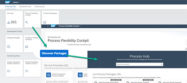
Accelerate Automation In SAP Workflow Management
SAP Workflow Management, including live process content packages, can help simplify and accelerate your automation journey. Live process content packages contain references to digital workflows, decisions, process visibility scenarios, user interfaces, and cloud application programming model modules. In this article, experts from SAP share an example of the steps a business process expert would take…
-

Demand for Cloud-based Finance Technology
In his article “Complexity Drives Demand for Cloud-based Finance Technology,” SAPinsider’s Research Director Ogo Nwanyanwu shares insights from his latest research and interactions with the SAP finance community. Nwanyanwu explains that transforming core finance functions and moving to cloud-based SAP ERP deployments are top priorities for organizations he surveyed. Pressure to reduce the cost and…
-

Cloud Decisions for Executives Who Run SAP
The cloud is here. According to SAPinsider research results and discussions with executives, many companies are now operating in the cloud. During the November Executive Meeting, participants learned about the latest research around cloud and heard executives share their cloud journeys. The meeting and its executive insights are the focus of this article. Riz Ahmed,…
-

NEW Data Management Strategies and SAP HANA Research – Video Highlights
SAPinsider surveyed 138 IT professionals across the world during March and April 2022 about their data strategy, goals, and challenges, especially with migrating and managing data in the cloud. The survey discovered that SAP customers are deploying more data solutions – databases, data warehouses, data lakes – and a wide range of technologies to enable…
-

- Premium
Supply Chain Challenges, Forces and Transformation Strategy
To address supply chain challenges and tackle the forces, there is a need for an inclusive strategy and a holistic transformation which includes People, Processes and Tools. It is crucial that it’s a business-driven transformation and NOT just a technology/tools transformation. The supply chain needs to be Connected, Predictive and Cognitive to enable organizations to…
Related Vendors


Your request has been successfully sent