SAP S&OP
What Is Sales and Operations Planning?
By integrating the operational areas of the business (e.g., sales, marketing, procurement, manufacturing, etc.), Sales and Operations Planning (S&OP) ensures monthly alignment with the enterprise’s supply, demand, and finance planning needs. Effective and efficient supply chain management relies on a well-orchestrated and executed S&OP process.
Execute S&OP with SAP Integrated Business Planning
SAP provides S&OP planning as part of SAP Integrated Business Planning to drive revenue growth, reduce inventory carrying costs, and increase productivity. Key capabilities include:
What Is Sales and Operations Planning?
By integrating the operational areas of the business (e.g., sales, marketing, procurement, manufacturing, etc.), Sales and Operations Planning (S&OP) ensures monthly alignment with the enterprise’s supply, demand, and finance planning needs. Effective and efficient supply chain management relies on a well-orchestrated and executed S&OP process.
Execute S&OP with SAP Integrated Business Planning
SAP provides S&OP planning as part of SAP Integrated Business Planning to drive revenue growth, reduce inventory carrying costs, and increase productivity. Key capabilities include:
• Enable real-time planning
• Simulate and compare scenarios
• Collaborate across departments
• Monitor performance and future alignment
Key Considerations for SAPinsiders
- Operational Excellence: Achieving S&OP Success. Watch this on-demand webinar to take your S&OP process to the next level. Often, companies lack end-to-end supply chain integration because of functional silos and poor executive support within their current S&OP process. Alex Kahsar, Senior Solution Advisor for GIB USA, leads the discussion to showcase the benefits of an S&OP process that is capable of operating inside a core SAP ERP system, while also simplifying and optimizing supply chain execution. Too often, SAP users resort to a patchwork of disparate solutions to solve various use cases, creating complex, brittle connections, which prevent organizations from adapting to future business changes.
- 5 Steps of S&OP to Achieve an Integrated Business Plan. In this article, learn the framework and five essential steps of the S&OP process: 1) data gathering, 2) demand planning, 3) supply planning, 4) pre-S&OP meeting, and 5) executive S&OP. Venkata Ramana Nethi, CSCP, CPIM, MGR IT Build-Run Operations & Quality, Schlumberger, writes that the “S&OP concept and methodology, regardless of industry, has been around since the 1980s; however, with new advances in technology it has become more transparent and agile, adopting and delivering nearly accurate results in dynamic environments to achieve balance.”
- 7 Questions to Guide You on Your S&OP Transformation. In this blog post, explore a series of seven questions that can help business stakeholders uncover the root causes of the issues in an S&OP strategy and determine ways to fix them. By answering these questions carefully and in order, an organization can craft an effective S&OP strategy.
Vendors in the S&OP space include: Innovation Enterprise and OpsVeda.
490 results
-
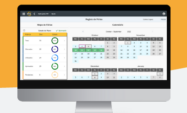
Why Would You Combine SAP BTP and Neptune DXP? | One-pager
Discover how you can easily digitize your SAP processes by combining SAP BTP and Neptune DXP together! See all the ways we can help make your app development easier.
-
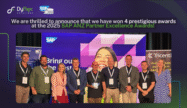
DyFlex emerges as leader in multiple categories at the 2025 SAP ANZ Excellence Awards
We are thrilled to announce that DyFlex has once again demonstrated its excellence in the SAP ecosystem, securing multiple prestigious awards at the 2025 SAP ANZ Partner Excellence Awards. This recognition underscores our commitment to delivering outstanding value and innovative solutions to our clients. Award Highlights DyFlex’s exceptional performance has been acknowledged across several…
-
Daikin Builds ASRS-Compliant Reporting with SAP Datasphere and SAC
Daikin, Australia’s leading air conditioning manufacturers met the threshold requirements to produce a sustainability report by the end of FY24/25. As the parent company, Daikin manages a complex business structure comprising of subsidiaries and operating entities across Australia and New Zealand. To meet aggressive deadlines and ensure full compliance with reporting standards, Daikin leveraged DyFlex’s…
-

Cybersecurity Testing Services: Why Enterprise Security Can No Longer Be an Afterthought | Tritusa
Cyber threats are evolving faster than ever. From ransomware attacks and phishing campaigns to data breaches and system compromises, organisations across the globe are facing increasing cybersecurity risks every day. For enterprises running critical systems such as SAP, cloud platforms, enterprise applications, APIs, and digital transformation programs, security is no longer optional, it is business critical. Cybercrime…
-

Program delivery paves a safe road to SAP S/4 HANA for Honda Australia
Industry: Automotive Capability: Program Delivery Customer: Honda Australia Honda is a Japanese multinational car, motorcycle and power equipment corporation that has been in operation in Australia since 1969. Today, Honda continues to be a motorcycle sales leader in Australia and is also one of the leading suppliers of Lawn & Garden equipment, generators and a…
-

Digital transformation in APAC with SAP AMS
Digital transformation is an ongoing theme not just for businesses in Australia, but also the entire APAC region.
-

7 Ways Comprehensive Testing Mitigates Security Risks in SAP Systems with Tritusa
SAP systems’ security is vital to business operations, and Tritusa offers expert solutions such as vulnerability assessments and compliance monitoring to address challenges like unauthorised access, data integrity risks, and evolving cyber threats.
-

Zalaris implements PeopleHub for SAP SuccessFactors at Victorian Water company
Getting HR systems right is no mean feat, especially in a competitive climate where workforces expect more from management systems.
-

Implement an ITIL Employee Service Desk with IC WebClient
Find out how you can use Interaction Center (IC) WebClient to support an Information Technology Infrastructure Library Service Management implementation. The author walks you through the typical 10-step incident management process and shows how you can customize IC WebClient to handle these steps. Key Concept IT Service Management (ITSM) and Information Technology Infrastructure Library (ITIL)...…
-

Discover the Time-Dependent Depreciation Parameters of the New Depreciation Calculation in mySAP ERP 2005
As of mySAP ERP 2005, SAP has delivered a new depreciation calculation in Asset Accounting. This algorithm introduces new depreciation concepts as well as new functionality — period interval-based parameters and time-dependent depreciation parameters. Key Concept The new depreciation calculation available with mySAP ERP 2005 is 100% compatible with the older one. No configuration changes...…
Related Vendors


Your request has been successfully sent