SAP SRM
SAP Spend Management: SRM
When an organization has many suppliers, it is critical to manage them efficiently and build long-term relationships. Establishing long-term relationships allows for more ideas and feedback to flow freely, streamlined operations, cost reductions, and improved customer service.
SRM Defined
SRM stands for Supplier Relationship Management, which falls under supply chain management. The main purpose is to establish two-way relationships between organizations and suppliers via a web-based platform. It covers innovative methods to coordinate business processes with suppliers, so they are more productive. SRM is integrated with the vendor’s systems for greater efficiencies with interactions. With SAP Supplier Relationship Management (SAP SRM), organizations can examine purchasing history, shorten procurement cycles, and collaborate with partners all in real time.
SAP Spend Management: SRM
When an organization has many suppliers, it is critical to manage them efficiently and build long-term relationships. Establishing long-term relationships allows for more ideas and feedback to flow freely, streamlined operations, cost reductions, and improved customer service.
SRM Defined
SRM stands for Supplier Relationship Management, which falls under supply chain management. The main purpose is to establish two-way relationships between organizations and suppliers via a web-based platform. It covers innovative methods to coordinate business processes with suppliers, so they are more productive. SRM is integrated with the vendor’s systems for greater efficiencies with interactions. With SAP Supplier Relationship Management (SAP SRM), organizations can examine purchasing history, shorten procurement cycles, and collaborate with partners all in real time.
Key Capabilities are:
- Operational Procurement: Catalog management, invoice creation, processing purchase orders, and shopping cart management.
- Strategy Sourcing: RFx and bids management and centralized sourcing.
- Operational Contract Management: Centrally managing supplier contracts.
- Supplier Self-Service: Self-service capabilities for suppliers.
- Services Procurement: Managing services for procurement.
- Operational Reporting: With workforce mobility option.
The significance of SRM is that it automates and streamlines the processes for materials that are ordered frequently, optimizing procurement. It allows organizations to maintain long-term relationships with the right suppliers who have proven historically to be reliable partners. SRM supports supplier information management, compliance, risk management, and performance management.
Benefits of SRM
- Coordinates business operations
- Automates workflows
- Standardizes goods and services acquisitions
It is important to note the difference between SRM and procurement. SRM focuses on contracts and relationships, while procurement focuses on purchases, like ordering, invoicing, or paying. SAP has a cloud-based B2B sourcing and procurement application called Ariba where buyers and suppliers can do business in a networked structure. It provides capabilities such as supplier management, strategic sourcing, supply chain, procurement, services procurement and external workforce, and selling and fulfillment.
Vendor partners offering SRM include apexanalytix, SAP, smartShift.
Key Considerations for SAPinsiders are:
- Increase Supplier Compliance with Sustainable Business Networks. Discover why accurate records of supplier compliance in procurement and ongoing supplier management activities is an important activity.
- Simplify Supplier Qualification with SAP Supplier Lifecyle Management. Learn the functionality of how to simplify and foster supplier relationships, by reading this article.
- Understanding the Key Aspect of Supply Chain Visibility. Kumar Singh, SAPinsider describes what supply chain visibility is, how organizations struggle, and explains one method to kickstart your approach.
625 results
-

SAPinsider 2020 Virtual Conference Experience Draws Thousands, Provides New Immersive Experience
BOSTON – August 20, 2020 – SAPinsider, the world’s largest and fastest-growing independent membership organization of SAP professionals, continues to welcome members of the SAP ecosystem to its inaugural virtual conference, today and throughout the week. Live sessions started on Tuesday, August 18, and run through Friday August 21, 2020. More than 6,500 registrants have…
-
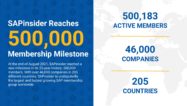
SAPinsider Reaches 500,000 Membership Milestone
BOSTON, MA – At the end of August 2021, SAPinsider reached a new milestone in its 25-year history: 500,000 members. With over 46,000 companies in 205 different countries, SAPinsider is undisputedly the largest and fastest growing SAP membership group worldwide. These record numbers amplify SAPinsider’s commitment to delivering cutting-edge content that helps the SAP user…
-

Mastering SAP June 2023
We’re bringing the thriving Mastering SAP community together – 800+ people, 2 days, 90+ hours of brilliant content and a plethora of unrivalled networking opportunities – to celebrate the talent, innovation and ideas literally transforming the way we work. 7-8 June, Melbourne. Register today!
-

 Premium
How SAP Business AI and SAP Asset Performance Management are Closing the Loop between Maintenance Strategy and Execution
SAP Asset Performance Management (APM) helps asset owners, managers, plant managers, reliability engineers, and maintenance technicians to define, implement, execute and monitor the optimal asset maintenance. Mastering SAP Premium Access Membership Required You must be a Mastering SAP Premium Access member to access this content.Join NowAlready a member? Log in here
-

LRS Meets Pressing Printing Needs of Modern Digital Supply Chains
Reliable printing solutions, critical for efficient supply chain and asset management operations, are often overlooked despite their importance in ensuring timely production of essential documents like labels and picking slips, with LRS offering certified output management solutions to address these issues amidst the transition to cloud technologies.
-

AI Agents: Transforming SAP Integration with Innovation and Compliance
Boomi is enhancing its SAP integration solutions with AI Agents focused on automating tasks and ensuring compliance with data privacy regulations, while developing an ‘AI Agent Registry’ for responsible governance, amidst growing concerns over security and compliance in AI implementation.
-

SailPoint deployment with SAP GRC/ Access Control
SAP Access Control (also generally referred as SAP GRC or SAP GRC Access Control) is a solution from SAP that enables organizations to control access across various SAP systems, minimizing the time and cost of compliance. It is an add-on to SAP NetWeaver platform, and works with SAP applications such as SAP ECC 6.0, and…
-

- Premium
Unlocking Business Potential with SAP Business Suite and SAP Business Data Cloud
Discover how the SAP Business Suite integrates core business processes, providing a comprehensive suite of applications to streamline and automate complex tasks. Mastering SAP Premium Access Membership Required You must be a Mastering SAP Premium Access member to access this content.Join NowAlready a member? Log in here
-
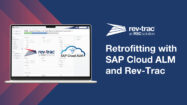
Automate SAP Retrofitting with a Rev-Trac Platinum & SAP Cloud ALM Integration
Rev-Trac enhances SAP retrofitting and change management through automated processes and real-time integration with SAP Cloud ALM, providing full traceability, compliance, and efficiency across ECC and S/4HANA landscapes.
-

Pitney Bowes Embraces Two-Tier ERP
Organisations implementing a two-tier ERP strategy, exemplified by Pitney Bowes’ shift from a monolithic ERP vision to a cloud-based architecture, can better balance global efficiency with local responsiveness.
Your request has been successfully sent