SAP Platform and Technology
SAP Business Technology Platform | SAP Cloud Connector | SAP Cloud Integration Platform | SAP Cloud Migration | SAP Cloud Platform | SAP Cloud Providers | SAP Cloud Strategy | SAP Container Platform | SAP Digital Asset Management | SAP Digital Integration Hub | SAP Digital Signature | SAP HANA Enterprise Cloud | SAP HEC | SAP Hyperscalers | SAP Infrastructure | SAP Messaging | SAP Smart Forms
What is SAP Platform and Technology?
SAP Platform and Technology history started with mainframe-based applications, with the first official release being the SAP R/2 solution. This was eventually replaced by SAP R/3 which was the first application running a 3-tier client/server architecture. A client/server architecture continues to be the model for on-premise applications sold by SAP, even when those applications are often running on some form of cloud infrastructure. The newest SAP applications use a purely cloud-based infrastructure and are often software-as-a-service solutions.
What is SAP Platform and Technology?
SAP Platform and Technology history started with mainframe-based applications, with the first official release being the SAP R/2 solution. This was eventually replaced by SAP R/3 which was the first application running a 3-tier client/server architecture. A client/server architecture continues to be the model for on-premise applications sold by SAP, even when those applications are often running on some form of cloud infrastructure. The newest SAP applications use a purely cloud-based infrastructure and are often software-as-a-service solutions.
While these represented the infrastructure on which SAP solutions were built, SAP customers also needed platforms on which to build and develop applications. The first solution that SAP released was the SAP NetWeaver platform which was a software stack for many of SAP’s applications. First released in 2004, SAP NetWeaver consisted of an ABAP software stack as well as a Java development stack. This allowed organizations to build and deploy applications using business APIs and integration capabilities to other SAP solutions.
Building on the success of SAP NetWeaver, SAP released the SAP Cloud Platform as a similar resource for organizations looking to build cloud-based applications. More recently, SAP brought the SAP Cloud Platform together with other services and technologies to release the SAP Business Technology Platform (BTP). Key capabilities of SAP BTP include database and data management, analytics, application development and integration, and intelligent technologies like artificial intelligence and machine learning.
One of the most important capabilities of SAP solutions has been the ability to enhance them by creating customizations and extensions. Implementations of SAP ERP systems like SAP ECC frequently involved thousands or even hundreds of thousands of lines of customized code based on SAP ABAP and written using platforms like SAP NetWeaver. New solutions like SAP S/4HANA focus on extensions which provide additional functionality without requiring underlying code changes using SAP BTP as the means for achieving these extensions.
SAP BTP is also the technology solution that SAP organizations are looking to use to leverage to build on their investments in SAP S/4HANA.
From a technology and infrastructure perspective, nearly nine in ten SAP customers are now running at least some SAP workloads in the cloud. Underlying data repositories are also more likely to be moving to cloud-based infrastructure.
SAP has many implementation partners that will either provide a technology platform on which SAP solutions can run or will assist with the development of applications that leverage technologies like SAP BTP. Examples of partners providing infrastructure include Dell Technologies, HPE, and Intel. Cloud providers for SAP services include AWS, Google Cloud, and Microsoft. Implementation partners also assist organizations with building on this SAP Platform and Technology.
1494 results
-

Why CERPASS® is Built on BTP: Cybersecurity at the Core
SAP’s Business Technology Platform (BTP) combines data management, analytics, application development, and AI with a security-first architecture, offering robust cybersecurity features that enable organizations to innovate securely and maintain compliance in a rapidly evolving digital landscape.
-
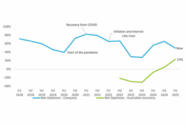
CFO Sentiment: Global Uncertainty Dents Confidence
Australia’s CFOs express growing optimism about the national economy while fearing diminishing business performance, with rising concerns over margin compression and competition amid uncertain global factors.
-

Achieve Excellence in Sales and Operations Planning
Sales and operations planning (S&OP) functions live at the tactical level of the planning hierarchy in an environment that synchronizes demand, inventory, and supply plans and considers profit objectives. S&OP has been discussed in multiple forums over the years because of the value it delivers to the organization as whole. In this article you will…
-

Yara future-proofs logistics with SAP YL
Customer: Yara International Industry: Process Industries – Agricultural Chemicals Key technologies: SAP YL Go-live: 09/2021 (Rail). 10/2021 (Maritime), 2022 (Truck) Country: Sluiskil, Netherlands Yara International, one of the world’s biggest producers of fertilizers and base chemicals, has taken a step forward with future-proof site logistics processes by implementing SAP Yard Logistics. A global player in their…
-

Best Practices for Implementing Sales and Operations Planning
The sales and operations planning (S&OP) process can bring about substantial improvements in the way a company manages its supply chain. Learn the building blocks of the S&OP process, what it needs in terms of technology, and how this is supported in different SAP solutions. Key Concept Sales and operations planning (S&OP) is the process...…
-

A SILK PURSE FROM A SOW’S EAR
a-silk-purse-from-a-sows-ear demonstrates how organizations can unlock substantial profitability by strategically managing indirect spend rather than focusing solely on revenue growth. Drawing on extensive analysis across industries, the report shows how modern procurement capabilities and data-driven decision-making can convert overlooked cost-saving opportunities into measurable business value.
-

SAPinsider Showcases Women in SAP Tech
Global statistics show that even though some progress is being made, women are still underrepresented, underpaid, and often discriminated against in the tech industry. To address this disparity, SAPinsider decided to dedicate this magazine edition to sharing the amazing work women are currently doing across the SAPinsider Community. Throughout its more than 20 years of…
-

Breakthru Beverage Group Reaches New Horizon on Journey to Become a Fully Integrated, Data-Driven Business
Modern consumers expect their unique needs to be met at the push of a button, and this expectation includes the food and beverage industry, as evidenced by the rapid increase in grocery pickup and delivery services, for example. Breakthru Beverage Group — which offers restaurants and retailers a portfolio of established and emerging beer, wine,…
-

Not Your Same Old Advanced Planning System Implementation!
Panelists: Robert Birdsall and Ryan Rickard, SCMO2 Date: September 6 Sponsor: IBP Bootcamp and SCM 2018 Gone are the days of engaging a System Integrator and waiting nine to twelve months for the first in a series of rollouts. With today’s cloud platform, and specifically SAP Integrated Business Planning (SAP IBP), the platform is upgraded…
-

Future-Proofing your ERP: Why APAC’s SAP Users in Insurance Are Turning to Appian
As insurance providers in the evolving APAC market seek agility amidst changing distribution channels and customer expectations, leveraging Appian’s low-code platform on top of their existing SAP systems allows for rapid integration of data, enhanced claims processing through embedded AI, and smarter decision-making without the need for costly core system overhauls.





Your request has been successfully sent