SAP T Code
What Are SAP T-Codes?
An SAP transaction code (T-Code) is a four-character shortcut that is used to access a transaction within an SAP system or application. Transaction codes provide direct access to the desired transaction from anywhere within the SAP system. Instead of using the menu or another means of accessing the transaction, you can start a function in a single step using an SAP T-Code. T-Codes can provide access to everything from user maintenance or authorization, workflow management, accessing SAP ABAP tables and dictionaries, running SQL queries, or transaction control. Every function in an SAP ERP system has a T-code associated with it. There are thousands of transaction codes available in different SAP systems and applications.
What Are SAP T-Codes?
An SAP transaction code (T-Code) is a four-character shortcut that is used to access a transaction within an SAP system or application. Transaction codes provide direct access to the desired transaction from anywhere within the SAP system. Instead of using the menu or another means of accessing the transaction, you can start a function in a single step using an SAP T-Code. T-Codes can provide access to everything from user maintenance or authorization, workflow management, accessing SAP ABAP tables and dictionaries, running SQL queries, or transaction control. Every function in an SAP ERP system has a T-code associated with it. There are thousands of transaction codes available in different SAP systems and applications.
Use of T-Code is performed by logging onto the SAP application using the SAP GUI or SAP Front End, placing the cursor in the SAP command field, typing the transaction code, then pressing enter. Depending on the role that a user plays within an organization, they will have different T-codes that are important to them. Administrators may focus on transactions related to that topic, while developers may use those connected to ABAP or SQL queries. Business users may use T-codes that relate to processing their daily tasks. Users can add T-codes that they use most frequently to a favorites list that allows them to access them more readily. SAP systems also provide the capability for users to create custom SAP T-codes by using the transaction SE91.
Key Considerations for SAPinsiders
- If you’re moving to SAP S/4HANA and rely on transaction codes, then you need to determine what has changed. SAP has changed a number of things with the SAP S/4HANA release, and one of them is the T-codes that are available. This event session by Arghadip Kar walks through how to find which transaction codes have been deleted or placed in SAP S/4HANA that were available in SAP ECC. It also helps organizations that are planning for the move to SAP S/4HANA to plan around customizations in their existing system that may use decommissioned transaction codes.
- You can map standard transaction codes to common phrases to make them easier to use and remember. A functionality that SAP provides is that of creating custom T-codes. But many users struggle with remembering the names of transaction codes despite the regularity of working with them. This article by Muhammad Ramzan walks through mapping standard transaction codes to common phrases to make them easier to remember, and easier to access from custom code. Following this approach ensures that authorization checks are not bypassed, and the authorizations to the actual transactions remain intact.
943 results
-
Benchmark Report: Low-code, No-code Development for SAP
While the demands from businesses for new applications and updates continue to increase, they are often met with reluctance or delays by the IT teams who are constantly under pressure with digital transformation related complexities or IT backlogs. However, to be competitive and responsive to customers, there is no choice but to be fast and…
-

Implement Minimum Production Lot Sizes within CTM Planning While Maximizing Capacity Usage and Demand Fulfillment
The Capable-to-Match (CTM) engine in SAP Advanced Planning and Optimization executes planning per individual demand. When using minimum lot sizes, CTM applies the minimum lot size consideration individually to each demand within a time bucket. This can lead to underutilized capacity in the factory and unfulfilled customer demands. Learn about an approach you can use...…
-

Improve Planning Results by Forecasting at the Product Characteristic Level
Learn the process flow of characteristic-based forecasting (CBF) in SAP Advanced Planning and Optimization (SAP APO). Follow a step-by-step procedure to configure the master data, create CBF-relevant configuration, release the forecast at the characteristic level from demand planning, and interpret the results. Key Concept Demand Planning (DP) in SAP Advanced Planning and Optimization (SAP APO)...…
-
Westernacher Consulting Shines in Sustainability and Supply Chain Transformation
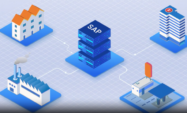
Westernacher Consulting, founded three years before SAP, is a long-term partner known for its expertise in supply chain solutions, strategic implementations with SAP technologies, and a commitment to sustainability, establishing a strong presence in the APAC region and offering tailored workshops to enhance clients’ supply chain performance.
-

Airlines, Spices, Solar, and Steel: Why SAP’s Most Diverse Quarter in APAC Matters
From Garuda Indonesia to Goldi Solar and Samsung Electro-Mechanics, SAP’s Q1 2026 Asia Pacific customer wins reveal a region where cloud ERP and Business AI are no longer on the roadmap — they’re in production.
-
Development Tips for Creating Mobile Apps with SAP BusinessObjects Design Studio and the SAP BusinessObjects BI Platform
Learn how to design, create, and deploy mobile applications with SAP BusinessObjects Design Studio and the SAP BusinessObjects BI platform. Key Concept The SAP BusinessObjects Mobile application provides mobile access to Design Studio applications. As mobile usage differs from desktop usage, a different development approach is required when creating applications for mobile usage. Today’s business...…
-

Governance for Low-code Platforms
Low-code governance is about making decisions with consistent, structured criteria to rollout low-code apps to support IT in delivering business goals, so that they generate business value with minimum risks. Mastering SAP Premium Access Membership Required You must be a Mastering SAP Premium Access member to access this content.Join NowAlready a member? Log in here
-

APJ and ANZ are booming for SAP – and clients can boom with the right partner
SAP’s Q3 2024 results highlight Asia Pacific and Japan as its fastest-growing cloud revenue region, with FPT Software, a key partner, achieving significant client success by streamlining SAP ECC system processes, yielding a 300% faster tax submission and improved data management.
-

TCS Speeds Consultant Deployment by 30% with SAP Learning Hub
Tata Consultancy Services (TCS) is reporting gains from scaling SAP skills development across its workforce. The company says it has reduced consultant readiness time by 30%, lowered training logistics costs by 45%, and increased the number of SAP-certified consultants fourfold through expanded SAP Learning Hub use and an internal program. The results show how workforce…
-

How the most decorated team in esports built its edge on SAP data
Team Liquid, the top esports organization, leverages SAP’s AI technology to analyze massive gameplay data, enhancing decision-making and efficiency while saving significant manpower and costs, demonstrating a successful model for integrating AI in competitive environments.
Your request has been successfully sent