SAP Trade Promotion Management
What is Trade Promotion Management?
Trade Promotion Management (TPM) is focused on strategizing which promotional events have the greatest customer return on the invested marketing dollars. To determine this, companies must capture the expected promotional events, their costs, and the anticipated uplift.
Manufacturers and retailers require real-time visibility into their trade promotion landscape and adjust supply and demand parameters as business scenarios change. Through trade promotion, companies can expand their market share of specific products, better compete against competitors, and increase their retail partners.
With the use of technology, companies can optimize their trade promotion management by:
- Improving sales planning and budgeting
- Optimizing customer business planning
- Strengthening promotional planning
- Supporting execution and settlement
Key Considerations for SAPinsiders
What is Trade Promotion Management?
Trade Promotion Management (TPM) is focused on strategizing which promotional events have the greatest customer return on the invested marketing dollars. To determine this, companies must capture the expected promotional events, their costs, and the anticipated uplift.
Manufacturers and retailers require real-time visibility into their trade promotion landscape and adjust supply and demand parameters as business scenarios change. Through trade promotion, companies can expand their market share of specific products, better compete against competitors, and increase their retail partners.
With the use of technology, companies can optimize their trade promotion management by:
- Improving sales planning and budgeting
- Optimizing customer business planning
- Strengthening promotional planning
- Supporting execution and settlement
Key Considerations for SAPinsiders
- Improve effectiveness of trade dollars and supply chain by linking products in orders to specific promotions. According to Michael Debevec, President of Debevec Consulting, Inc., companies using TPM assign attributes to promotional spending that help them analyze actual results and compare the actuals to the original plans. “You assign each promotional event an identifier that you link to a new type of condition record, a campaign determination record,” he writes. “During order processing, you use the combination of customer, product, and date to determine if an active promotion is available. If one is available, the system stores the promotion identifier with the sales order line item.” Read the full article to learn more about the SAP TPM landscape and key system components.
- Avoid supplier stockouts by integrating trade promotion management with demand management planning. Planning a trade promotion with a retailer means ensuring product is available to meet expected demand. Not doing so leads to customer dissatisfaction and impacts to brand reputation and future sales. Manoj Ambardekar, an SAP subject matter expert with more than 20 years of IT and manufacturing experience, says to avoid stockouts, you need to determine the promotion uplift — the expected increase in demand beyond the baseline forecast. Doing so provides the total demand for a promotion. “TPM helps managers create a trade planning structure and gain visibility into trade promotions. Managers can identify the most profitable customers, fastest-moving product groups, and most effective types of promotions (e.g., end-of-aisle displays or front-page ads),” he writes. Read the full article to learn the configuration steps of a business scenario for a trade promotion.
1177 results
-

From Complexity to Intelligence: Scaling Enterprise AI with SAP Business AI, SAP Databricks, and DXC Technology
This article discusses how DXC Technology leverages over 30 years of partnership with SAP to help enterprises effectively implement and scale AI solutions, such as SAP Business AI and SAP Databricks, overcoming challenges like data silos and governance issues to drive significant business transformation.
-
Agriculture Commodity Scheduling
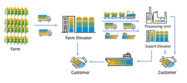
Agriculture commodities follow a complex supply chain and are influenced by global demand and inventory levels along with local weather, harvest conditions, and freight availability. The commodities are traded, hedged, stored, and speculated in most of the world. The commodity therefore transacts through multiple entities before it is ultimately consumed by processing units for end-customer…
-

SAP Shops S/4HANA Public Cloud to Retail for Supply Chain Fix
SAP has launched the SAP S/4HANA Cloud Public Edition tailored specifically for retailers, featuring enhanced supply chain capabilities aimed at optimising inventory management, improving operational efficiency, and facilitating omnichannel operations.
-

 Premium
How SAP Business AI and SAP Asset Performance Management are Closing the Loop between Maintenance Strategy and Execution
SAP Asset Performance Management (APM) helps asset owners, managers, plant managers, reliability engineers, and maintenance technicians to define, implement, execute and monitor the optimal asset maintenance. Mastering SAP Premium Access Membership Required You must be a Mastering SAP Premium Access member to access this content.Join NowAlready a member? Log in here
-

Mastering SAP Connect 2025 in June, now in conjunction with SAP Spend Connect
Mastering SAP Connect 2025, scheduled for June 5–6 in Gold Coast, Australia, will introduce a new dedicated Procurement Track alongside existing sessions on Enterprise Asset Management and Supply Chain Management, aiming to enhance collaborative learning and resilience in SAP solutions.
-

SNP Advances AI for Unstructured Data in M&A with Kyano Oros
M&A teams must enhance their understanding of unstructured data, which comprises about 80% of enterprise data and harbors significant risks, using SNP’s Kyano Oros AI platform to improve deal readiness and governance while ensuring essential information is accurately identified and managed during transactions.
-

Troubleshoot the Three SAPSprint Root Error Categories for Server-Based Printing on Windows
A failed printout can delay or disrupt important meetings or cause you to miss deadlines. See how to avoid printer failures when using SAPSprint by analyzing the three most common types of errors. Also find answers to common SAPSprint issues in the SAPSprint FAQs. Key Concept Processing in SAPSprint involves generating print data via the...…
-

Mayekawa Wins SAP Concur Innovation Award
Mayekawa Mfg Co Ltd received the SAP Concur Innovation Award for successfully streamlining its expense management processes through automation, significantly reducing its Finance team’s workload and improving compliance and visibility.
-

How cbs Elevates Master Data Management for SAP Landscapes
As SAP customers strive for intelligent enterprise architectures, achieving high-quality master data remains a significant challenge due to issues like inconsistent records and duplication, but cbs Corporate Business Solutions offers a structured Master Data Management framework that combines cleansing, governance, and strategic partnerships to ensure lasting data quality and support successful digital transformations.
-

Finding the Right Solution for Asset-heavy Industries
Enterprise asset management (EAM) lives and thrives on foolproof planning and scheduling. That’s a given – but today, we live in a world where there aren’t many givens regarding outside forces affecting supply chains and operations. This is especially true for asset-heavy industries such as energy and infrastructure. Underinvesting in planning and scheduling can lead…
Related Vendors


Your request has been successfully sent